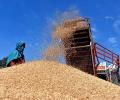
A decision to tap the 30 countries for exporting wheat was taken at a meeting of the commerce ministry on Thursday.

The Russia-Ukraine crisis, along with general bullishness in agricultural commodities, has ensured that after a fairly long time, most of the 24 commodities for which the Centre declares the minimum support price (MSP) are trading above it. The exceptions here are chana or gram and a few varieties of pulses. This might gladden the farmers, especially those who are still holding on to their stocks from the previous kharif harvest or are harvesting the latest rabi crop. But this could stoke retail and wholesale inflation.
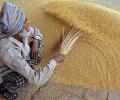
India's opening stocks of wheat in the central pool are expected to be 19.5-20 million tonnes as on April 1, 2022, the lowest in the last three years, but much higher than the normative level required for maintaining a buffer and strategic reserve, trade and market sources said. In accordance with the buffer and strategic reserve norms, India should have a wheat stock of 7.5 million tonnes in the central pool as on April 1 each year and this year's stocks, though the lowest in the last three years, will still be over 160 per cent more than what is required. On the export front, both government and trade sources are unanimous that this year (FY22) they will be 7-7.25 million tonnes, a record, while in the next financial year, they might touch even 10 million tonnes if the current momentum is maintained.

India's wheat exports could touch a new record of 10 million tonnes in 2022-23, up from a record seven million tonnes in the current financial year, if global market conditions remain choppy and no curbs are imposed on outbound shipments. That is the bullish estimate by officials from global trading firms and market watchers who say the Russia-Ukraine crisis has not only attracted global buyers to India but also pushed the price of Indian wheat from around $320 per tonne (FOB) to over $360 per tonne in less than 10 days. Food secretary Sudhanshu Pandey told reporters that wheat exports till February-end have already reached 6.6 million tonnes and by the end of March, outbound shipments will reach seven million tonnes.
India is looking to tap its diplomatic missions abroad to enable grain exporters in the country to ship out wheat and corn as supplies from Russia and Ukraine are expected to remain disrupted for some time to come. Between the two items, pushing for wheat is easier because of a huge domestic surplus. "We are hand holding our exporters and support from various Indian missions abroad is also being channelised accordingly," a senior government official said. Global wheat prices have jumped since the Ukraine crisis started, with wheat futures in the US reaching their highest levels since 2008.

In the three months leading up to the Assembly elections, Chief Minister Yogi Adityanath's government distributed over 1.4 million tonnes (MT) of wheat, 0.95 MT of rice, 0.10 MT of chana (gram), 101.9 million litres of soybean oil and 100,000 tonnes of salt as free ration. This was part of the Covid relief package, officials said.

Hindustan Unilever (HUL) hiked prices across its portfolio of products by 3-13 per cent in multiple tranches in February, with the sharpest increase of 13 per cent seen in the 100 gm Lux soap pack, the price of which increased to Rs 35 from Rs 31 earlier. The price of the 125 gms soap pack of Lifebuoy was hiked from Rs 31 to Rs 33, a rise of 6.5 per cent. In January, the company had hiked the price of the same stock-keeping unit from Rs 29 to Rs 31.

Future Retail has shut most of its Big Bazaar stores since February 25 (Friday) and its website is also down as it missed lease payments to Reliance Industries (RIL). RIL will open most of the 200 Future Retail stores as Reliance stores in the next week and it is in the process of taking stock, re-branding, and transferring 30,000 Future Retail and Future Lifestyle employees on to the rolls of its manpower and staffing firm Reliance SMSL, according to a source. The first tranche of stores are set to be opened as early as in the next two days.

'The weekend advance booking are extremely encouraging for these movies, and the extended break due to Mahashivratri, will provide a significant impetus.'

Recently, South Korean Foreign Minister, Chung Eui-yong, dialled his Indian counterpart, S Jaishankar, in New Delhi. His government, he said, "regretted the offence caused to the people of India". A day earlier, India had summoned the South Korean ambassador to express its "strong displeasure" over "an unacceptable social media post".
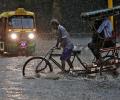
Though early days, meteorologists point towards a neutral La Nina during the initial phase of the four-month monsoon season this year that starts from June. If this holds true, by the time the rains hit the mainland, it could mean there would be one less reason to worry about the prospects of the monsoon this year. Weathermen said making any accurate prediction of how El Nino will behave and what impact it can have on the progress and distribution of rains is difficult to say at this point. A clear picture will emerge around late May or early June.

Consumer companies have started taking orders via phone calls and are also pushing retailers to order through their B2B applications.

Offline retailers are feeling the Omicron January chill as consumers are apprehensive about venturing out in the midst of rising Covid cases across the country. Covid restrictions, as well as concerns over the new virus variant, are seeing shoppers pull back from the high streets and shopping malls, clearly cautious about streaming into stores and choosing to self-censor instead. Offline retailers' hopes of a bumper End-Of-Season Sale (EOSS) and Republic Day (R-Day) Sale to compensate for losses over the pandemic have been dashed. Fewer trips to malls mean lower footfall and sales, resulting in higher piling of stock - and possibly higher discounts.

The Centre has, perhaps for the first time, decided to provide funding support to farmer-producer organisations, krishi vigyan kendras, custom hiring centres, and individuals for purchasing them.

The government's food subsidy in the ongoing fiscal year is expected to be a little less than Rs 4 trillion.
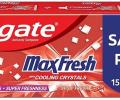
Colgate-Palmolive India (Colgate India) on Wednesday met distributors' body to sort out the issue of price parity between the traditional trade and organised distributors, which are present offline as well as online. These companies include Jiomart, Booker, Udaan and Elastic Run. Colgate India's meeting with distributors comes after the traditional channel stopped supplying its Colgate MaxFresh range of products in Maharashtra.

Expect fast-moving consumer goods makers (FMCG) to raise prices again next month owing to raw materials, transport, labour and packaging material costs remaining high or becoming even costlier. Whether it is packaged wheat flour and basmati rice or biscuits and shampoos, these products will become 2-10 per cent more expensive. Adani Wilmar will hike the price of its packaged wheat flour by 5-8 per cent and of its basmati rice by 8-10 per cent next month.

The latest hike is likely to be followed by another such move next month, said industry players. Before the latest hike, companies had initiated price hikes to the tune of 12-13 per cent in 2021 but they weren't able to fully cover the increase in costs.

'We expect exports to touch Rs 1,000 crore by the end of the year.'
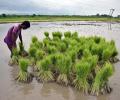
Among the key demands of agitating farmers has been a legal guarantee on minimum support price (MSP). The protest reached a crescendo when thousands of farmers from Punjab and elsewhere marched towards Delhi late last year and decided to block the main entry points once they were denied entry. The Centre, on its part, held 11 rounds of discussions with the protesters and even offered to amend some of the provisions without much success. With now one of their chief demands met, farmers have now moved on to force the government to concede on MSP.
 © 2025 Rediff.com - Investor Information - Advertise with us - Disclaimer - Privacy Policy - Sitemap - Feedback - About us - Terms of use - Grievances